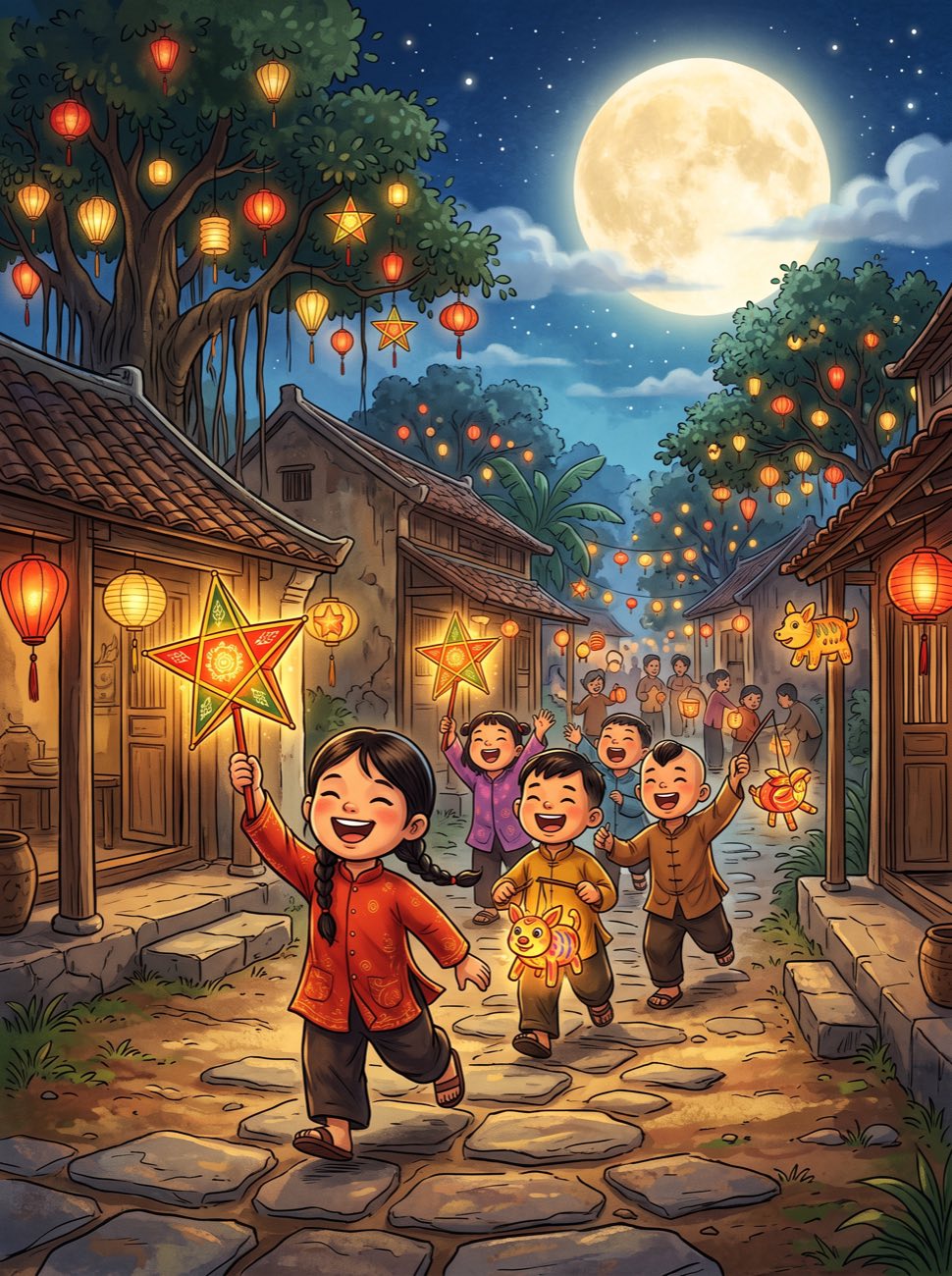
Most parents arrive at multicultural books for one of two reasons. Either a child is about to meet a world much wider than their street and you would rather they meet it in a story first, or a child already lives between two cultures and almost never sees either one in a book. The shelves treat those as the same request. They are not quite.
The useful frame, borrowed from librarians, is windows and mirrors. A window lets a child look into a life unlike their own. A mirror lets them see their own reflected back. The same book is often a window for one child in a classroom and a mirror for another — which is why the good ones work read aloud to a whole room.
What to look for
The single most reliable signal is specificity. A book set "in Asia" is a warning. A book set at a particular festival, in a particular country, using the right word for the lantern and the right name for the moon, generally had somebody behind it who knew what they were describing. Vagueness is the tell — not unfamiliarity.
- Named things. Not "a special cake" but a mooncake. Not "a paper lantern" but a đèn ông sao. Children handle real names effortlessly and remember them longer than the plot.
- Ordinary life, not only festivals. Culture that only appears on holidays reads like a costume. The strongest books show a normal evening as well as a celebration.
- Children who want something. A story where the child is a tour guide rather than a character is a lesson wearing a story's clothes, and children can tell.
- Somewhere to ask more. A glossary, a note, a pronunciation guide. It signals the author expected to be checked.
What to avoid
Books that treat a whole continent as one place. Books where the moral is that the unfamiliar culture is charming. Anything where the food is the entire content — food is a fine door, but a poor room. And be wary of stories that resolve by the outsider child teaching the local children something; it is a surprisingly common shape and it points the wrong way.
How to actually use them
Reading it is most of the job. Beyond that, three things do more than a unit plan:
- Keep the names and say them badly. Trying and getting it slightly wrong teaches more than substituting an English word.
- Attach it to a date. A festival gives a story a place in the year, which is what turns it from a one-off into something a child expects to come round again.
- Let the questions go unanswered. "I don't know, let's find out" models the actual skill better than having the answer ready.
Where to start
If you want a date to build around, the Mid-Autumn Festival is the easiest entry point in the calendar — lanterns, mooncakes, a full moon and a story, on 25 September 2026. It works as a single evening at home or a week of classroom work.
It is also the clearest place to watch the specificity test do its job. The same festival is kept on the same night in China and in Vietnam, and the stories told are not the same stories: the China edition turns on mooncakes, riddle-lanterns and the Jade Rabbit, while the Vietnam edition turns on star-lanterns, lion dancers and Chú Cuội in his banyan tree. Eleven tales each, and they are not the same eleven. A book that flattened both into one Asian moon festival would have deleted the only part worth teaching. The same moon is followed across eight countries in all — Myanmar, Thailand, Cambodia, Laos, Singapore and Malaysia each have their own edition too, because each one keeps the night differently.
For the stories themselves, Vietnamese folktales are unusually well suited to younger children — short, gentle, and explanatory rather than moralising. The Once Upon a Lantern books collect them for ages 4–12 — start with The Five Colors of a Gentle Heart, twenty tales from ancient Vietnam and China with a virtue behind each colour. The five-minute animal bedtime stories carry the same values in a form short enough for a school night, and the guide to bedtime stories about kindness covers how to read one so it lands.
And if you would rather a child made something than only listened, the Story & Coloring Books pair a read-aloud story with a page to colour for holidays around the world, ages 3–8.