Bedtime is a strange time to teach anything. The child is tired, you are tired, and neither of you has much appetite for a lesson. Which is precisely why a story works there and an instruction does not — a story asks nothing of anyone. It just gets told.
The best bedtime stories about kindness are small. Not a grand rescue, not a heroic sacrifice — somebody gives up something minor at a real cost to themselves, and something follows from it. Small is believable, and believable is what a child measures their own day against.
What actually makes one work
Three things, more or less:
- A cost. Kindness that costs nothing is not a story. The character has to give up the last piece, or the good spot, or being right.
- A consequence, not a verdict. Something happens next. Nobody arrives to announce that a good deed has been done.
- An ending you can stop at. If the story needs a paragraph of explanation to land, it has not landed.
The stories that fail are almost always the ones that state their own moral. A child who is told what to think about a story will argue with it; a child who is left to decide will usually arrive somewhere better than the sentence you had ready.
Why five minutes
Five minutes is not a marketing number, it is a survivable one. A story that takes twenty minutes gets read on good evenings. A story that takes five gets read on the evenings when you are exhausted and the day went badly — which are the evenings it matters most.
Consistency beats ambition here. Most of what a bedtime story does comes from having happened again, not from having been impressive once.
One virtue at a time
Kindness is a big word to a small child, and a vague one. It gets easier to hold when it is broken into pieces — being generous, being honest, being patient with someone who is being difficult, doing the right thing when nobody is checking. Each of those is a different thing to practise, and each one deserves its own story rather than being lumped in with the rest.
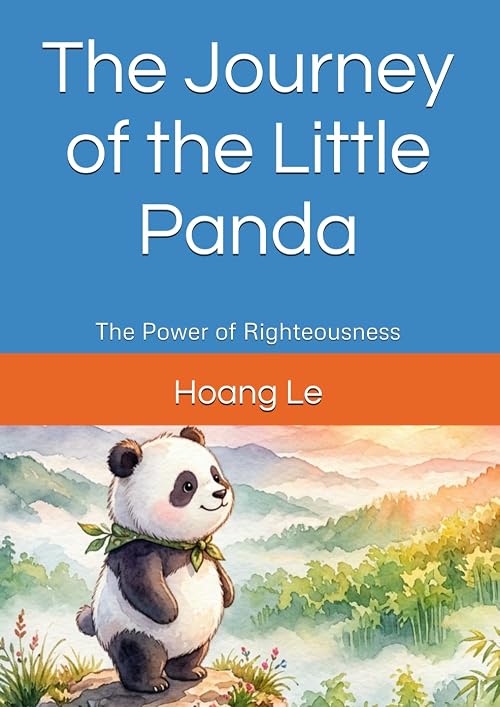
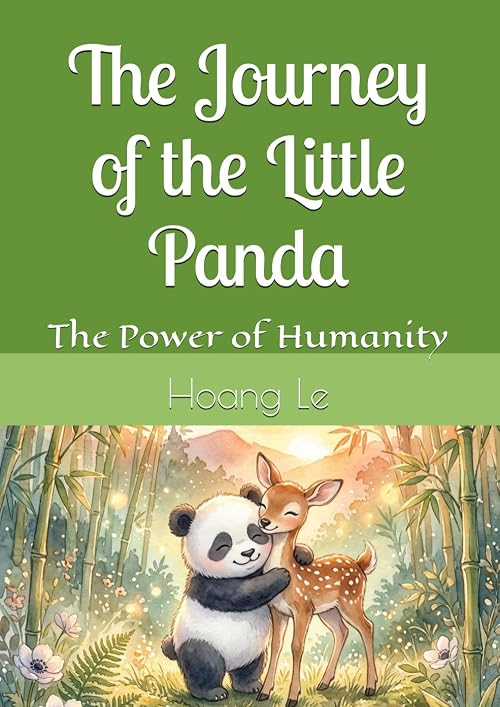
That is how the Journey of the Little Panda books are built: one virtue per book, five short stories in each, following the same cub through one small dilemma at a time. There are seven of them, and because they are standalone you can start with whichever virtue is live in your house this month — which is usually the one that caused an argument at dinner.
- The Power of Kindness — for the child who has not worked out yet that giving something up is a choice rather than a loss.
- The Power of Trustworthiness — for the week after a promise got broken, in either direction.
- The Power of Courtesy — for being patient with someone who is being difficult on purpose.
- The Power of Wisdom — for the harder problem of two right things and only one of you.
- The Power of Humanity — for noticing that somebody else is having a worse day than you are.
- The Power of Righteousness — for doing the right thing on an evening when nobody is checking.
- The Power of Action — for the gap between meaning to help and actually getting up.
If you would rather have the set in one volume, the Premium Collection carries all seven powers — thirty-five stories — with coloring pages alongside them. And if the thing that is live in your house right now is a new classroom and a new teacher, Little Panda's First Days Back to School runs the same idea across the first fourteen days of a school year.
There is a reason so many of these are animal stories. A panda cub who will not share is a panda cub. A boy who will not share is the child being read to, and children work that out immediately. The animal puts one step of distance between the lesson and the listener — which is exactly enough room to think about it without having to defend yourself first.
How to read one
Slower than feels natural, and with a pause before the last line. Then stop. If you want to talk about it, ask a question rather than give an answer — why do you think she did that? — and be willing for the answer to be "I don't know," which is often what thinking sounds like at that hour.
And if they ask for it again tomorrow, read it again. Repetition is not a failure of variety. It is a child telling you which story is doing something.
For stories rooted in a specific tradition, the Vietnamese folktales guide covers where these tales come from and how to share them — including one about the shadow on the moon that a child can go outside and check. If you want the wider shelf rather than one tradition, the guide to multicultural children's books covers how to choose them, and the Mid-Autumn Festival guide gives the whole thing a date to hang on: 25 September 2026.