A slow-burn romance is a love story where attraction builds gradually across the whole book instead of igniting at once. The two characters are kept apart by a real obstacle, and the tension of waiting is the point.
Ask ten romance readers what they want and at least seven will say some version of slow burn, and then, if you push a little further, most of them will struggle to explain exactly what they mean. Slow is easy to define. It just means time. Burn is the part that is hard to manufacture, and it is the part that separates a book readers finish out of habit from one they stay up too late finishing because they cannot stand not knowing.
Slow burn vs. instant attraction
In an instant-attraction romance, the two leads want each other by the end of the first chapter, and the book is about what they decide to do with that. In a slow burn, the wanting is what the book is about, and it arrives so gradually that a reader usually sees it well before either character will admit to it. Neither is the better kind of book. They simply ask different things of you: one asks you to enjoy the heat, the other asks you to hold your breath.
What slow burn means outside a romance novel
The phrase escaped the genre a while ago, and people now use it about real relationships, about friendships, about careers that took a decade to catch. In that looser everyday sense, a slow burn just means something that arrived by degrees rather than all at once, and that its gradual arrival is part of why it lasted. That is a fair use of the words, but it is not quite what a reader means when she says she wants a slow burn. In a book, the phrase is a promise about structure. It tells you the author has agreed to withhold something on purpose, for most of the length of the story, and that the withholding is the design rather than a symptom of a plot that could not get going.
A slow burn needs a real obstacle, not just a delay
A slow burn that works is not simply two people who like each other and are prevented, by circumstance, from saying so for three hundred pages. That is just delay, and readers can feel the difference between delay and tension within the first few chapters. Real tension needs a reason the characters cannot be together that would still exist even if they both said exactly how they felt on page one. Distance, obligation, fear built from a real wound, a promise made to someone else, a danger that loving this particular person would actually create. Remove the external obstacle and an honest, internal one should still be standing there, because that is the obstacle a happy ending actually has to resolve.
The waiting has to be doing something
In a burn that works, every scene the two characters share, even an ordinary one, quietly changes the shape of what is between them, so that a reader tracking closely could chart the relationship's progress without a single declaration ever being spoken. A shared cup of tea poured a particular way. A letter that keeps arriving long after it stopped making sense to keep writing one. A language learned badly, on purpose, because it is the only way to talk to someone. These small, accumulating gestures are doing the real work that the eventual kiss only gets credit for.
Slow burn is a pace, not a trope
This is where slow burn gets confused with the tropes it usually travels with. Friends to lovers, enemies to lovers, second chance, forced proximity: each of those names the relationship the two people already have when the book opens, and the particular kind of trouble that relationship is going to cause them. Slow burn names something else entirely. It names how long the author intends to make you wait. An enemies-to-lovers novel can turn in fifty pages and be very good at it, and a friends-to-lovers novel can hold two people at exactly the distance they have always been for four hundred pages without ever feeling slow, because nothing in it is actually being withheld. The trope is the situation. The burn is the clock. A reader asking for a slow-burn enemies-to-lovers book is asking for both at once, which is a much narrower request than it sounds, and part of why those books are so hard to find.
How long should a slow-burn romance take?
There is no page count that settles it, which frustrates people who would very much like one. What matters is proportion. If the two of them are still holding back past the midpoint, and the pages spent getting there have genuinely changed what is between them, the book is burning. If they arrive at the thirty percent mark and spend the rest of the story happy together against some external threat, that is a different and perfectly good kind of novel, but it is not the thing the phrase is promising. In my own books the wait runs anywhere from a single summer to twelve years, and the twelve-year one does not feel six times slower than the summer, because a burn is measured by how much is at stake when it finally breaks, not by how many months the calendar turned.
Why closed-door romances often burn slowest
This is also why closed-door and fade-to-black romance, so often treated as the more restrained option, can produce some of the most effective slow burns in the genre. When physical intimacy is not available as the release valve, everything else has to carry more weight: a hand held a beat too long, a name used for the first time, the specific way someone says goodbye when they do not expect to see the other person again. Restraint, used well, does not lower the temperature of a story. It just moves the heat somewhere else, usually somewhere more interesting. I have written more about that in why closed-door romance is having a moment.
The payoff has to be worth the wait
The ending matters more in a slow burn than in almost any other kind of romance, because a reader has been asked to hold their breath for the entire length of the book. If the payoff feels smaller than the wait that preceded it, the whole structure collapses in retrospect, no matter how good the middle was. The best slow burns understand this and spend real time on the turn itself, letting the two characters actually reckon with everything that kept them apart rather than skipping straight to the relief of being together. The reckoning is the reward. The reunion is just where it happens to take place.
How to tell a slow burn from a book that is stalling
None of this is a formula so much as a discipline: real stakes, quiet accumulation, and a payoff that has clearly been earned rather than simply arrived at. A slow burn does not require withholding for its own sake. Readers can feel the difference between a book that is patiently building toward something and one that is simply stalling to pad its length, and that difference usually comes down to whether each delayed moment is teaching the reader something new about the two people involved, or just repeating the same held breath over and over without adding anything to it.
Setting matters more to this than it gets credit for, too. A slow burn set somewhere the characters cannot simply decide to close the distance, a remote fishing village an ocean from home, a border neither person can cross freely, gives the waiting an honest shape instead of an artificial one. The place itself becomes part of what has to be reckoned with before two people can actually be together, which is often more convincing to a reader than any number of near-misses and misunderstandings manufactured purely to keep two willing people apart a little longer.
Five slow-burn love stories I have written
Every novel in Love Without Borders is built on the principle above, and each one waits on a different obstacle.
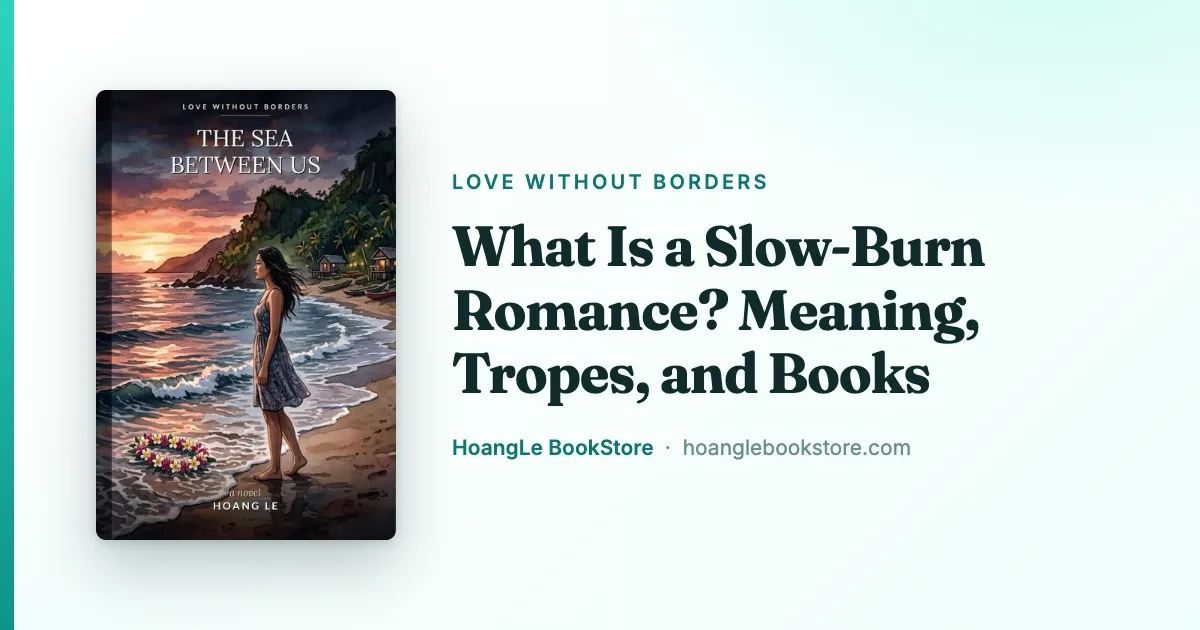
The Sea Between Us is the longest burn of the five. Twelve years and an ocean sit between a young woman who has been afraid of the water since it took her father, and the wandering researcher who coaxed her back into it for one summer in a Hawaiian fishing village.
The Keeper of the Light gives its lighthouse keeper at the mouth of the Bosphorus six years of keeping everyone at a distance, ever since the sea took his brother. That is the kind of obstacle no confession on page one would solve.
Love to Be Loved by You hands two students one luminous year in a rainy Pacific Northwest college town, then takes thirteen more to answer whether that year was real.
Grenade Heart sets its waiting in the neon of District 4 in Ho Chi Minh City, where what keeps the two of them apart is danger and grief rather than shyness.
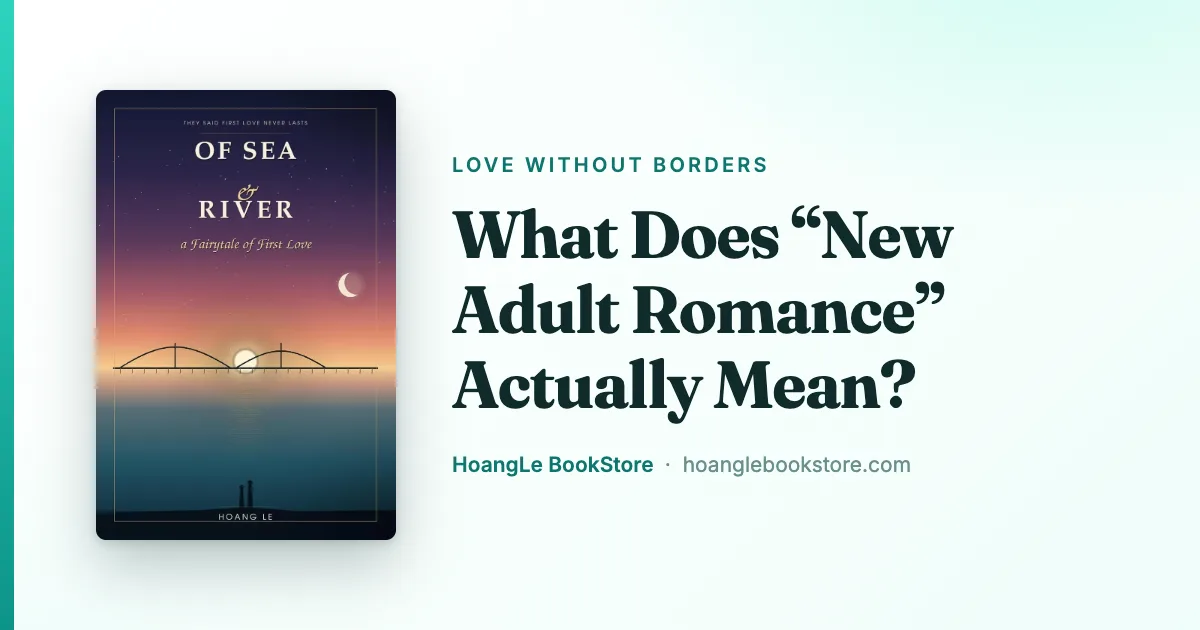
Of Sea and River is the gentlest of the five, six hundred kilometers of first love between a boy who belongs to the sea and a girl who belongs to a city of rivers, held together at the start by nothing but good-morning messages and a sunset passed from one horizon to the other.
All five are closed-door and clean, with no explicit scenes, which is a large part of why they burn the way they do.