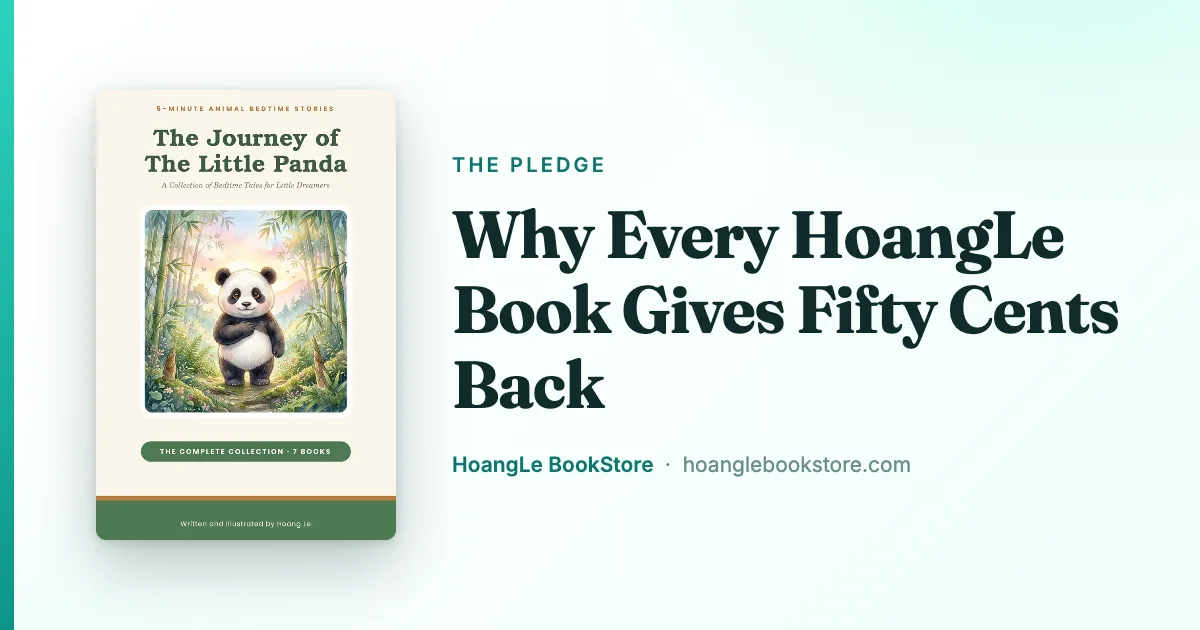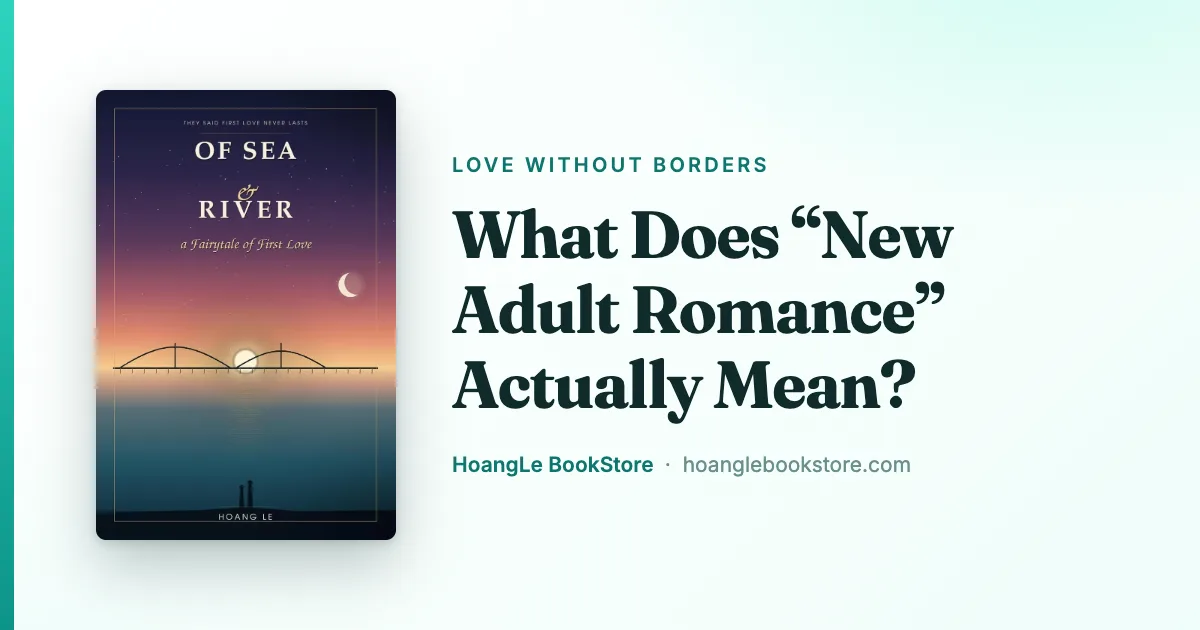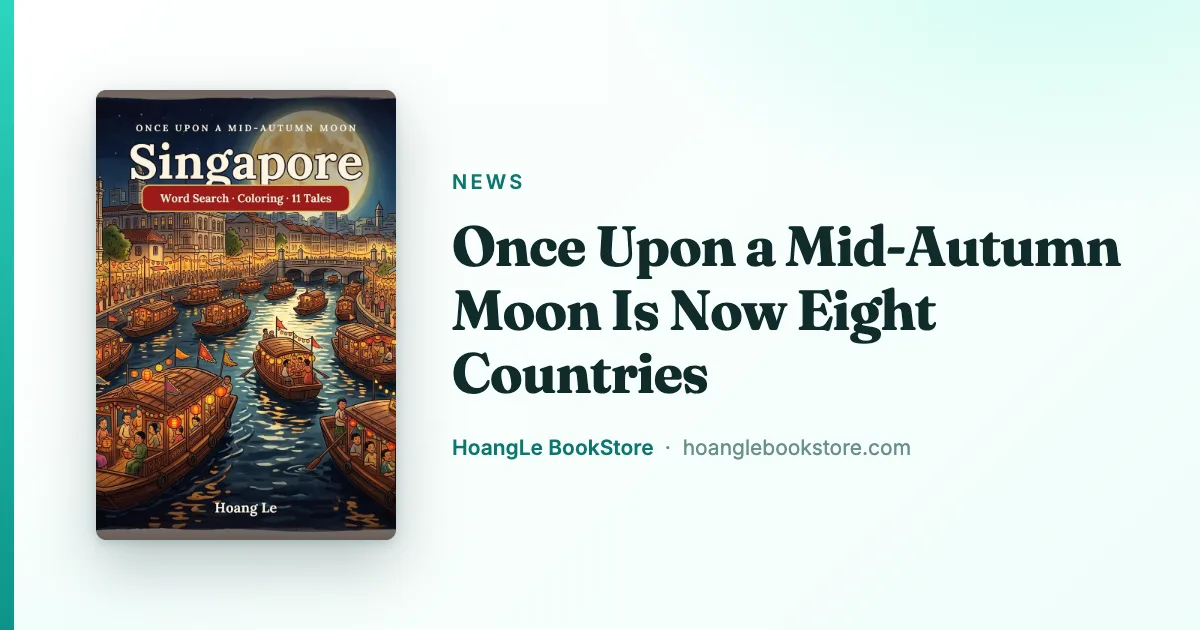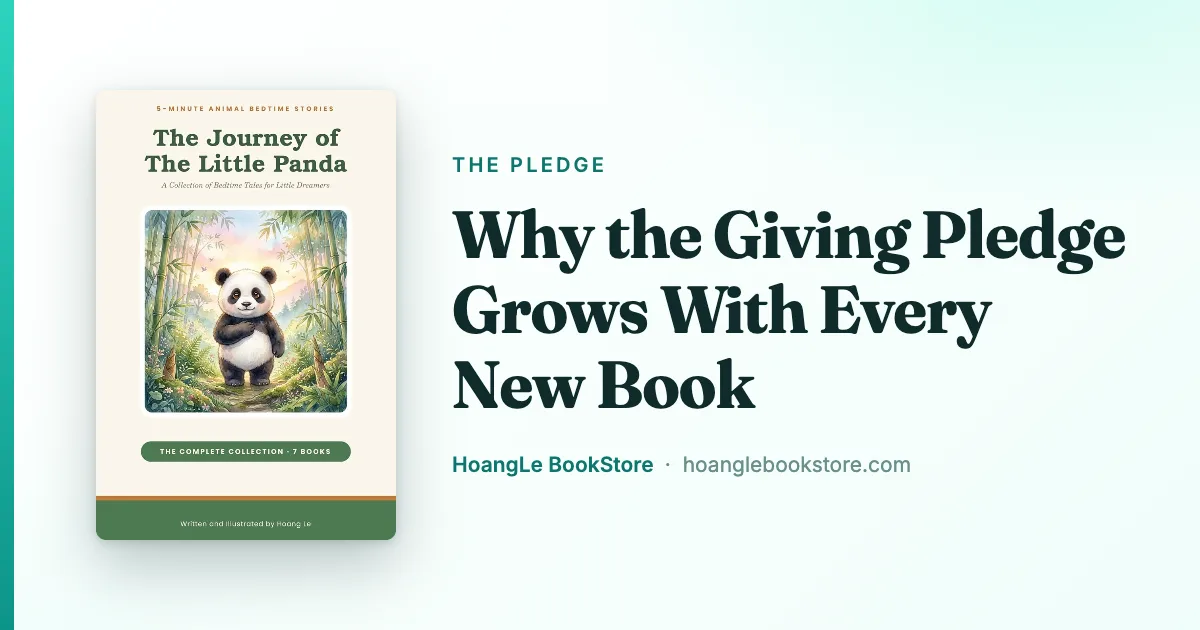
Somewhere in the last few months, the catalog quietly crossed into the mid-twenties: two dozen and then some books, spanning gentle bedtime tales, story-and-coloring collections, and sweeping adult romance. Every single one of them, including the newest additions to the Once Upon a Mid-Autumn Moon collection, carries the same line: fifty cents from every copy sold goes to a veterans organization. It is worth pausing on why that pledge scales the way it does, rather than being capped or scaled back as the catalog grows.
A pledge that was never sized to a single book
The pledge did not start as a marketing feature attached to one flagship title. It started as a personal decision, made before there was much of a catalog to attach it to at all: Hoang's step dad, a US Army veteran, backed this business in the quiet, unglamorous way people do who show up again and again without asking for credit, and once the books started selling, keeping all of the proceeds felt wrong. The natural response was to give something back, specifically to the community that looks after veterans and their families.
Because the pledge was built around that relationship rather than around any single book's marketing plan, it was never going to be something that applied to a launch title and quietly faded afterward. It applies to whatever the catalog happens to include this month, whether that is seven books or twenty-six, because the reason for it has nothing to do with how many titles exist and everything to do with one specific person it is meant to honor.
What growth actually means for the pledge
A bigger catalog does not dilute the pledge. It does the opposite: every new title, from a new Little Panda story to the newest country in the Mid-Autumn Moon collection, is simply one more way for that fifty cents to reach a reader who might never have found the very first book the pledge was attached to. Eight new editions of one series is not eight separate marketing decisions about whether to include the giving line. It is the same original commitment, showing up again, as many times as there are books to carry it.
This is also why the pledge has stayed deliberately modest in how it is described. It is not framed around a named charity yet, because publicly naming one carries real legal requirements around registration and agreement that have to be handled properly rather than rushed for the sake of a better sentence on a book jacket. It is described as what it actually is: a personal pledge, honestly stated, growing exactly as fast as the catalog that carries it.
It is fair to ask what happens as the catalog keeps growing well past twenty-six titles, and the honest answer is: nothing changes about the commitment itself, only its reach. A larger catalog means more readers encountering the pledge for the first time through whichever book happens to find them, whether that is a bedtime story picked up at a school book fair or a romance novel discovered through a late-night recommendation. The math scales. The reason behind it does not need to.
The part that does not change
What has stayed constant through every new release is the reason behind it. Hoang's step dad is not a figure from the past being honored in memory. He is present, still generous in the same unglamorous way, still the person the pledge is actually for. Every new book is, in a small way, another version of the same thank-you — not a bigger one, not a fancier one, just one more copy of the same idea, extended to whoever happens to pick up whichever title is newest.
The full story behind the pledge, and the man it is for, is on the giving page. The books page has the complete, growing catalog — twenty-six titles now and counting, every one of them carrying the same fifty cents.