Most Mid-Autumn traditions center on the moon. Myanmar's does something a little different, and once you know it, it is hard not to love it a little more for the difference: on the full-moon night of Thadingyut, the moon shares the sky with a thousand small lamps lit by hand, on every windowsill, up every path, along every pagoda step, until whole towns glow as though the stars had come down for the night.
A festival of light, not just moonlight
Thadingyut marks the end of Buddhist Lent, a three-month period of rest and reflection that closes with three glowing nights of lamps and candles. It is one of the most loved festivals in Myanmar, and it carries a distinct emotional register from its neighbors' versions of the same season: less about the harvest, more about welcoming light back into the world, and about the specific, deliberate ways people show respect to each other while doing it.
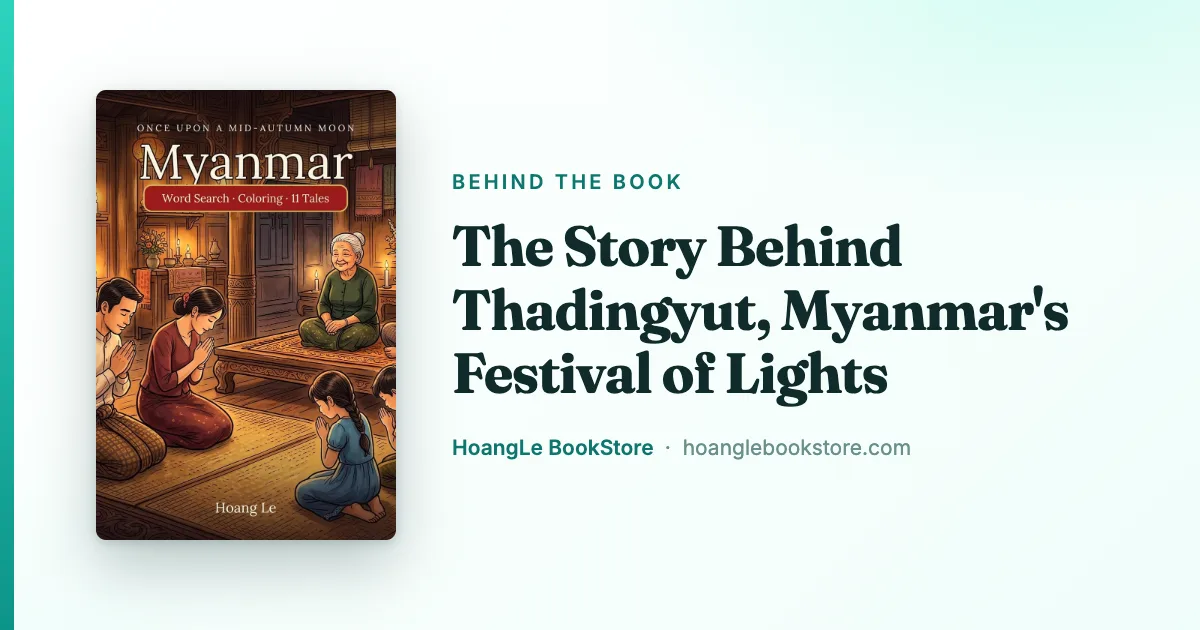
That second part is really the heart of it. Two customs in particular give Thadingyut its character. The first is the alms round: in the grey light before dawn, monks walk in a quiet line through the streets, and families place food gently into their bowls — a custom called hsun. The second, and the one that gives the festival its emotional center, is kadaw: on the last and brightest night, children kneel before their parents, grandparents, and teachers, press their palms together, and bow low — to give thanks, and, if something has gone unspoken all year, to ask forgiveness.
Eleven tales built from these real customs
Once Upon a Mid-Autumn Moon in Myanmar, the newest entry in Hoang Le's ongoing series, builds its eleven bedtime tales directly from these customs rather than around them. A girl lines a neighbor's dark path with borrowed lamps, thinking ahead about the stones an elderly woman cannot see. A boy offers a small pot of rice to a passing monk and learns that a gift is not measured by how much of it there is. A nervous young dancer discovers that a wobble in front of a crowd matters far less than being brave enough to step out at all. Each story closes the way every book in this series does: with a short, plainly stated lesson, and a small glossary of the real Burmese words used in the telling — hsaya for teacher, apho for grandfather, kadaw for the bow of thanks and forgiveness that closes the book.
What makes the collection worth reading as more than a language lesson is how unhurried it is about its own customs. A story about waiting patiently in a candle line at the pagoda is, quietly, a story about why waiting your turn matters. A story about sharing an umbrella with a stranger in a sudden rain shower is, quietly, a story about a stranger's cold feeling exactly as cold as your own. None of the eleven tales announce their lesson before they earn it.
It is worth being direct about something here, too: Thadingyut is a real, living festival, practiced today across Myanmar by real families, and a children's book borrowing its customs owes those customs some care. The book keeps its stories to invented children in ordinary festival moments — a shared umbrella, a kept promise, a bow of forgiveness — rather than claiming to retell any specific legend as history, which is the right place for a book like this to stay.
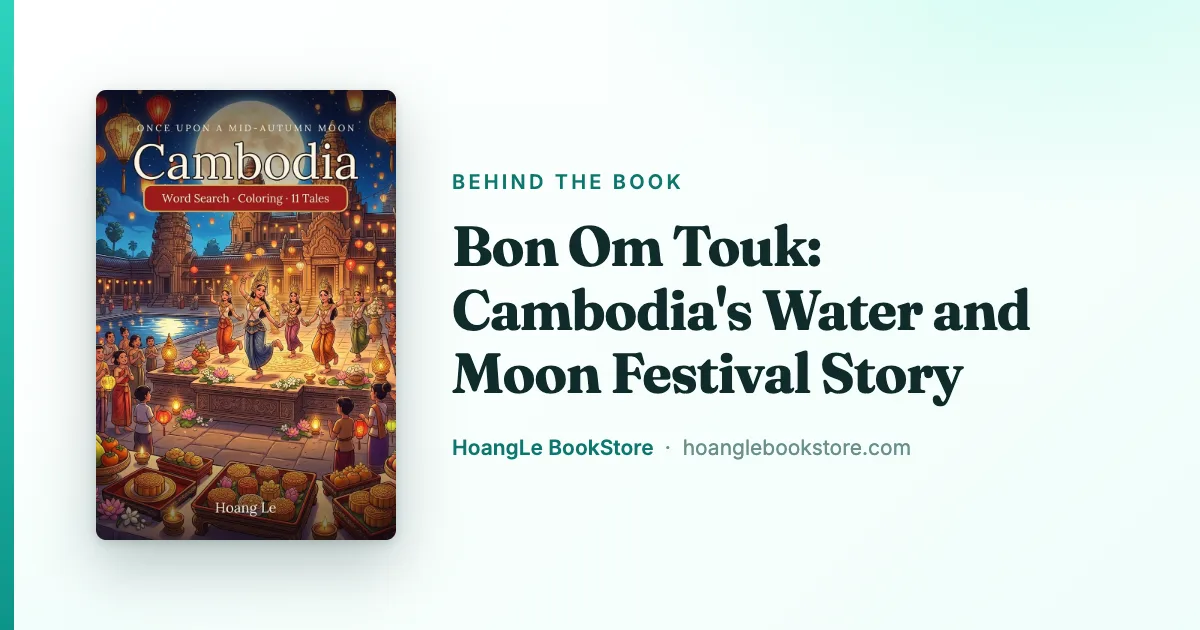
Myanmar is one of eight countries now in the Once Upon a Mid-Autumn Moon series, each one telling the same season through a different country's own customs rather than treating "Asia" as a single, interchangeable backdrop. The Vietnam and China editions are also available now, with the rest of the series — Thailand, Cambodia, Laos, Singapore, and Malaysia — rounding out the full eight-country collection. You can find Once Upon a Mid-Autumn Moon in Myanmar alongside the rest of the series on the Once Upon a Lantern hub.