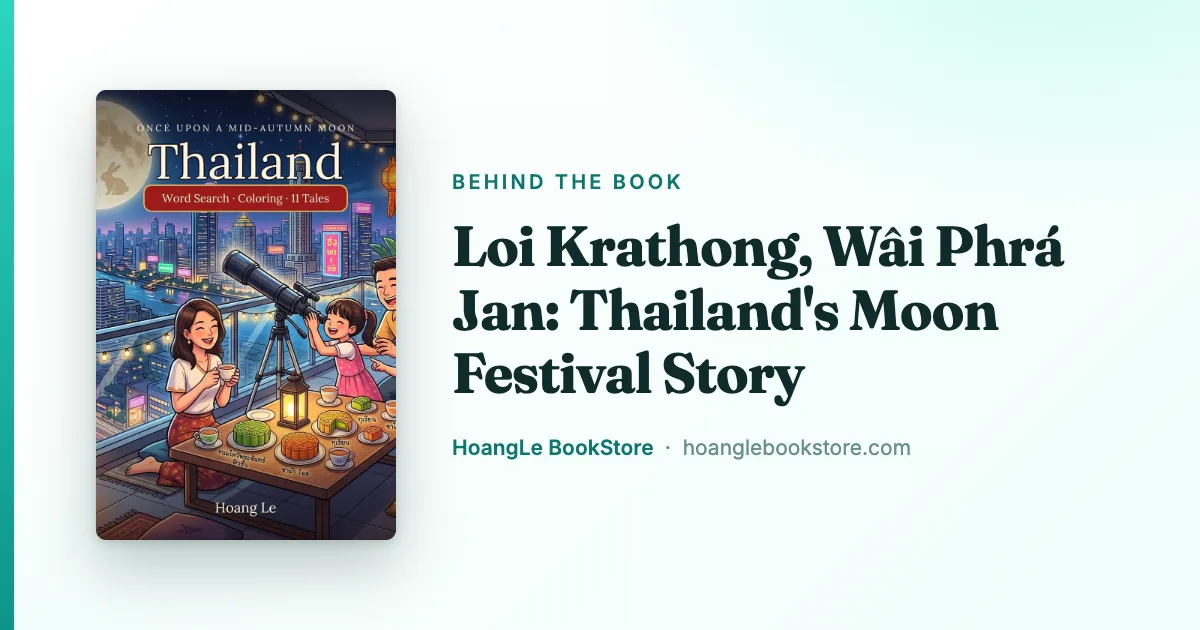
One of the easiest mistakes to make about Thailand's Mid-Autumn season is treating it as a single festival. It is not. Thailand actually keeps two distinct celebrations that both involve water, lanterns, and a bright moon, and mixing them up is a little like confusing Thanksgiving with New Year's Eve because they both involve a big meal. Getting the difference right was the first job of writing Once Upon a Mid-Autumn Moon in Thailand.
Two festivals, not one
The Mooncake Festival, kept mainly by Thai-Chinese families, falls on the fifteenth day of the eighth lunar month, the same night as its counterparts across the region. Its center is a ritual called wâi phrá jan, greeting the moon: a small table is carried outside, laid with mooncakes, tea, and a round pomelo, and the family bows to the full moon before making a wish. Loi Krathong, a separate and later Thai festival, sends small floating offerings called krathong out onto rivers and canals by candlelight — a different night, a different river-based custom, sharing only the same instinct to mark a night by the water and the moon.
The customs, in the stories themselves
Rather than pick one festival and ignore the other, the book tells both, clearly separated by chapter, each with its own real customs at the center. A grandmother teaches a granddaughter to peel a pomelo the proper way — scored by hand, its segments passed all around the table so that everyone tastes the same sweetness at once, because a fruit "round like the moon belongs to everyone." A grandmother making a krathong the old way, from a folded banana leaf and marigolds, gently turns down the quicker foam version a vendor is selling, because a leaf will soften back into the river while foam simply floats there forever — a small, concrete lesson in why the old way is sometimes also the kinder one.
The collection's spotlight story, the eleventh in the set, is built entirely around wâi phrá jan itself: a boy who arrives at the family's moon table with a long list of things he wants to wish for, and who — after his grandmother insists that gratitude has to come before any wish is asked — finds that naming what he is already thankful for leaves him with almost nothing left to want. It is the same instinct that shows up throughout this series and the rest of Hoang Le's catalog for young readers: a lesson delivered through a specific, lived moment rather than announced as a moral at the end of the page.
The book also makes room for the festival's quieter side, away from lanterns and market stalls. One story follows a fidgety boy taken to a wát, a Thai temple, to hear the monks chant before the festival meal begins — restless at first, certain that sitting still is a waste of a festival evening, until he is shown that stillness itself can be a kind of gift to the people around him. It is a smaller, less colorful moment than the lantern garden or the night market, and it earns its place in the book precisely because not every lesson in a culture's customs comes wrapped in fireworks.
Real customs, told with real words
Every story closes with the actual Thai word for whatever custom it is built around — wát for the temple, khom for a paper lantern, cháang for the elephants that sometimes appear in festival processions — spoken phonetically and explained simply, so a family reading aloud picks up a few real words of the language alongside the story itself.
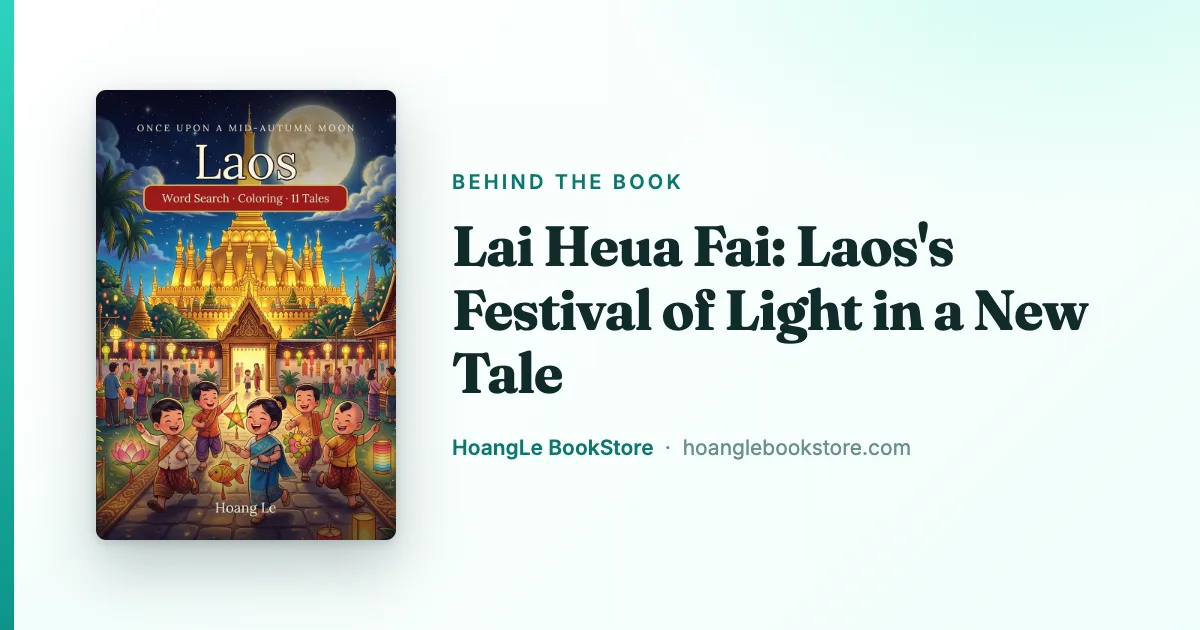
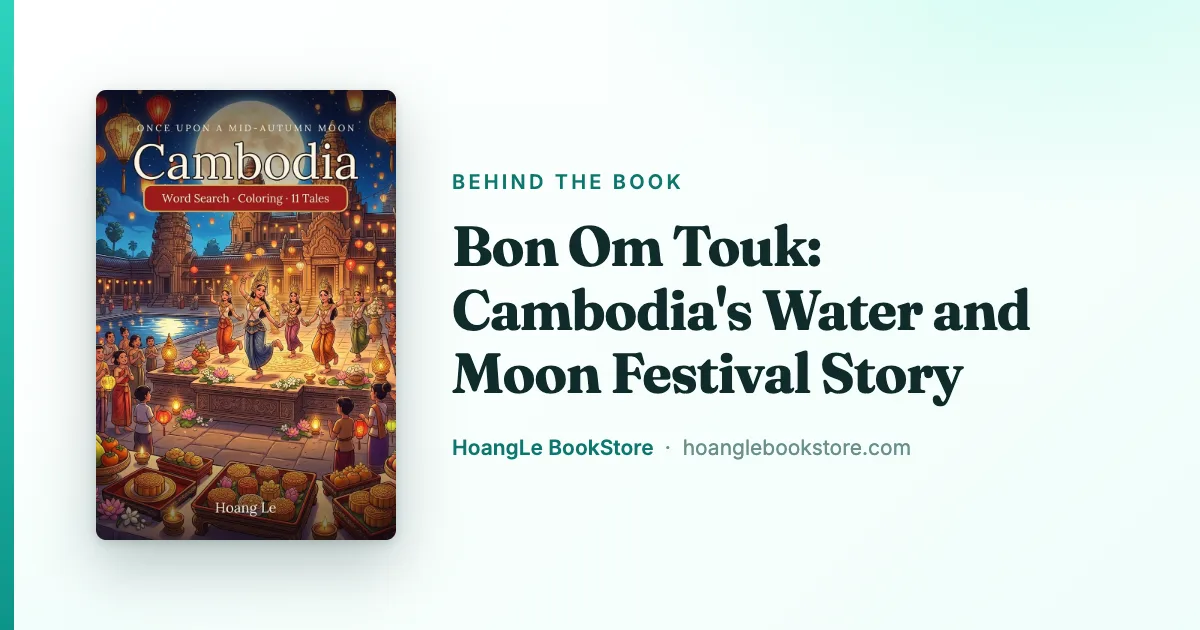
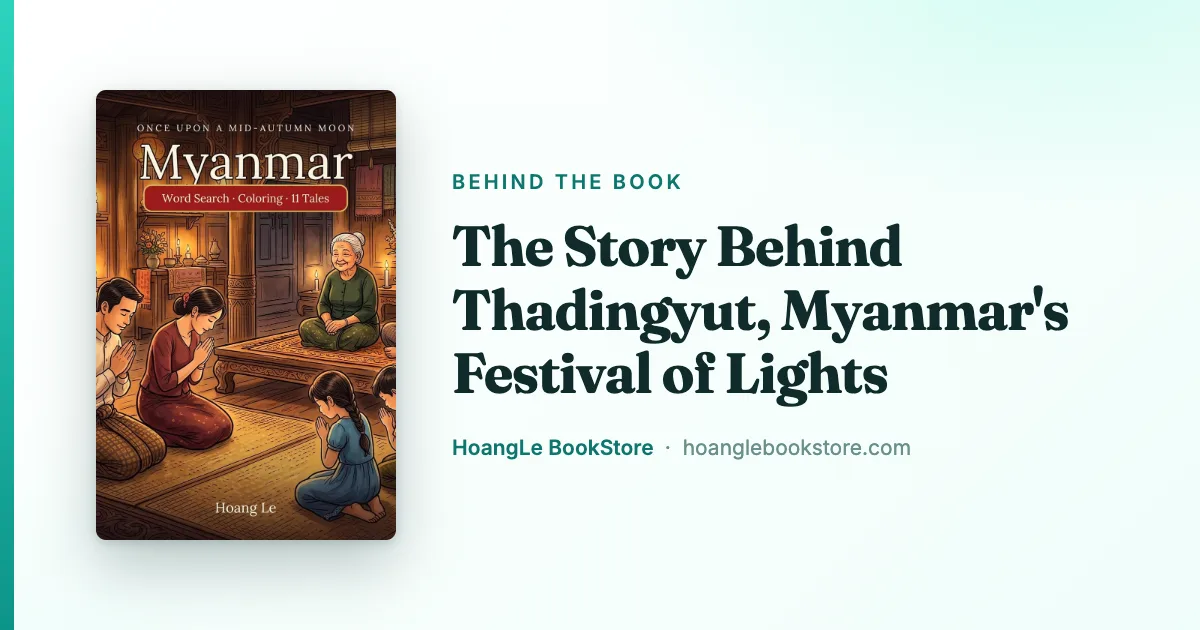
Thailand joins Vietnam, China, and Myanmar as the fourth country now live in the Once Upon a Mid-Autumn Moon collection, with Cambodia, Laos, Singapore, and Malaysia rounding out the full eight-country set. Once Upon a Mid-Autumn Moon in Thailand is available now, alongside the rest of the Once Upon a Lantern series.