Big feelings have terrible timing, and they seem to specialize in showing up right at bedtime. A child who seemed perfectly fine all day can suddenly be in tears over a lost toy from the morning, or furious about a rule from three hours ago, or quietly worried about something they cannot even name. Parents often assume this means bedtime itself is the problem. Usually it is the opposite: bedtime is simply the first quiet moment all day, and quiet is when feelings that have been pushed down finally have room to surface.
This is worth remembering before reaching for a fix, because the instinct in the moment is almost always to make the feeling go away as quickly as possible so everyone can get to sleep. Rushing past a big feeling, however gently, tends to backfire. A child who senses that their sadness or anger is inconvenient learns to hide it rather than express it, and hidden feelings do not resolve. They just come back later, usually at a worse time.
A better first move is simply naming what you are seeing, out loud, without trying to solve it yet. "You seem really frustrated about that" or "That made you feel left out, didn't it" does something surprisingly powerful for a small child: it tells them the feeling is real, visible, and not too big for the room. Children this age often do not yet have the words for what they are feeling. Hearing an adult supply the right word, calmly and without judgment, is frequently enough to take the edge off the feeling itself.
Stories can do a version of this same work, which is part of why a calm read-aloud belongs in the routine even on nights when feelings are running high. A character who is scared of the dark, embarrassed about a mistake, or jealous of a sibling gives a child a safe way to look at a feeling that might otherwise feel too big or too shameful to look at directly in themselves. Watching someone else feel it first, and come out the other side, makes it feel more survivable. This is different from a story that tries to teach a lesson about the feeling. The goal here is not instruction. It is company.
It also helps to resist explaining a feeling away before a child is ready to let go of it. "You don't need to be upset, it's just a toy" is true and also completely beside the point from a four-year-old's perspective, because feelings are not evaluated for whether they are proportionate. They are simply felt. A better approach is staying present through the feeling without trying to argue a child out of it, trusting that most big feelings, once they are acknowledged rather than fought, run their course in a few minutes on their own.
Consistency matters here too. A child who has learned, night after night, that big feelings at bedtime get met with patience rather than frustration starts to bring less fear to the feeling itself. They stop needing to escalate to be taken seriously, because they already know they will be. That, more than any single technique, is what actually shortens the hard bedtimes over time.
It is worth watching, too, for the difference between a child who needs comfort and a child who is testing a limit, because they can look nearly identical at eight at night and call for very different responses. A genuine big feeling tends to soften once it has been named and sat with for a few minutes. A limit-test tends to escalate the moment it senses an opening, more crying, a new demand, a sudden second complaint that appears the instant the first one gets resolved. Staying warm through both is important, but only the first one calls for lingering. The second is better met with the same calm, patient boundary you would use anywhere else in the day, just delivered a little more gently because it is late and everyone is tired.
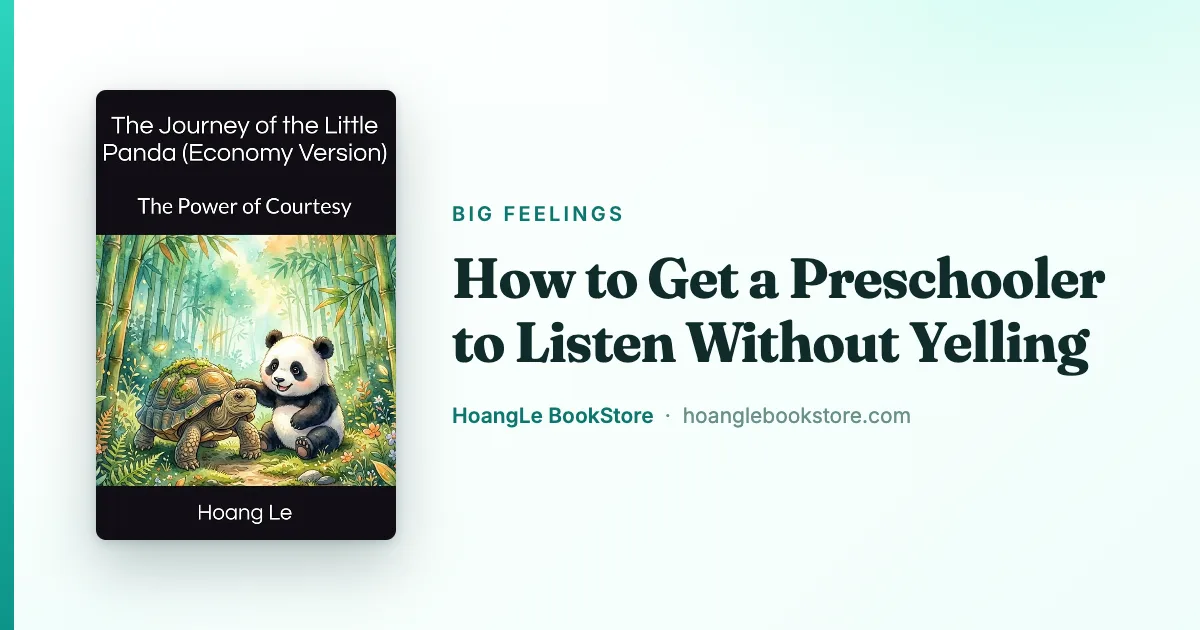
Books that let a small character sit with a real feeling, rather than skipping straight to the lesson at the end, are worth keeping close for exactly these nights. A story where someone is scared, embarrassed, or left out, and is simply allowed to feel that way for a page or two before things get better, models the exact thing you are trying to do at bedtime: stay present with a feeling instead of rushing past it. A few gentle options built for this age are on the books page, ready for whichever feeling shows up next.